

.svg)
The human body is a marvel of evolution, billions of cells working in precise harmony, trillions of neural connections forming our thoughts and memories, countless biological processes maintaining our existence. Despite this incredible complexity, our body is still limited by the simple fact that we eventually die. As we move into the next phase of human evolution, we must confront an uncomfortable truth: our biological bodies may be the greatest limitation to unlocking our full potential.
Throughout human history, we have been defined by our limitations and our relentless drive to transcend them. From the first stone tools that extended our physical capabilities to the development of medicine that pushed back against disease, humanity has always sought to overcome the constraints of our biological inheritance. We are a species of innovators, constantly reimagining the boundaries of what it means to be human. And now, synthetic bodies emerge as the latest and most radical attempt to evolve beyond our original design.
The convergence of neuroscience, artificial intelligence, and materials engineering is bringing us closer than ever to a transformative possibility: the ability to decouple human consciousness from its fragile biological housing. This isn't merely about extending life, but about fundamentally reimagining human existence. As the boundary between biology and technology fades, synthetic bodies could become flexible hosts for our consciousness. The implications are nothing short of revolutionary, offering not just survival beyond Earth, but an extraordinary expansion of human experience, capability, and potential.
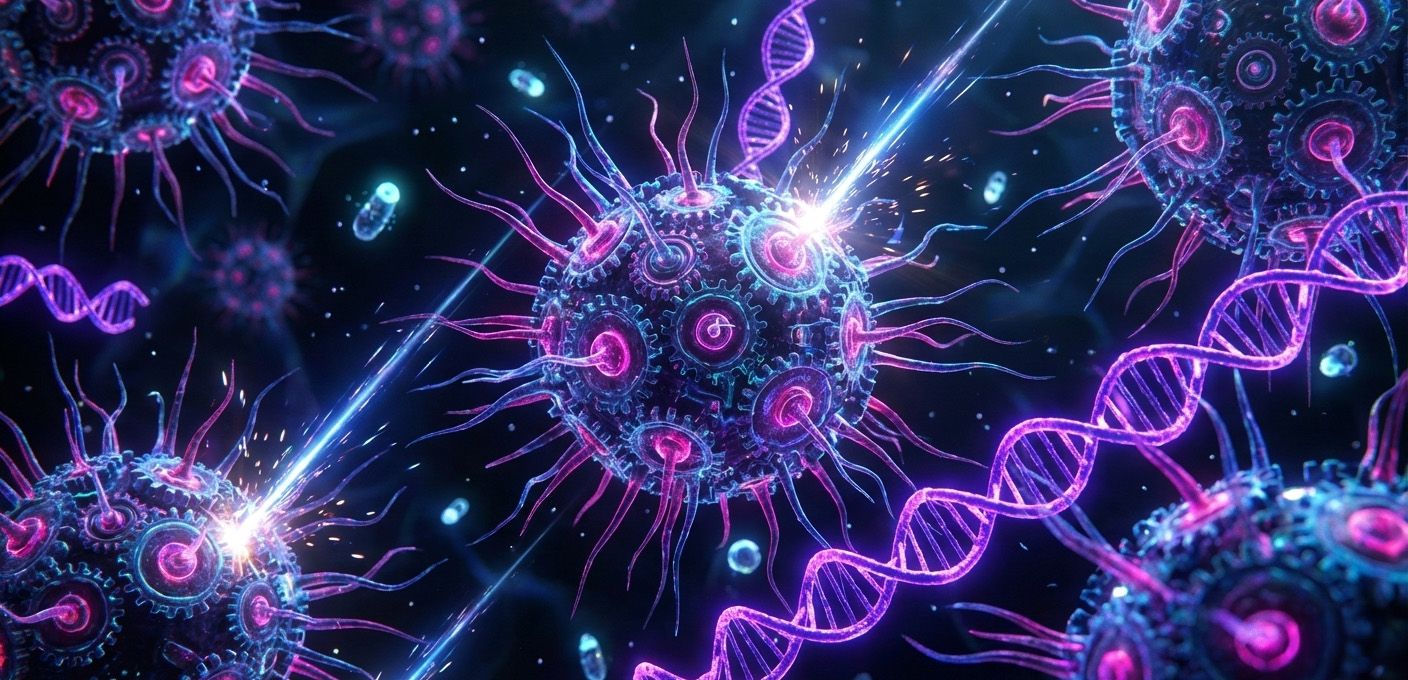
Let's examine our biology at three scales, starting with our cells, then our current technology, and finally our place in the cosmos. At each scale, we discover new challenges that make us question: is extending our biological lifespan even the right goal, or is there a world beyond biological bodies?
Picture yourself as a master watchmaker, responsible for maintaining not just one watch, but 37.2 trillion of them, each with countless microscopic gears that must work in perfect synchronization. Now imagine that every day, each watch faces a million potentially damaging events. This collection of watches represents the human body, where each cell, just like the watches, must stay in sync with trillions of other cells. Any disruption to this biological machinery can lead to disease or death. The scale becomes even more staggering at the molecular level, our DNA, the blueprint of life itself, endures an endless assault every minute: cosmic rays striking our cells, free radicals disrupting our molecular machinery, copying errors accumulating with each cell division. As a watchmaker, your work would never be done due to the perpetual need for repair from this relentless molecular warfare.
Today's most advanced regenerative technologies represent our best attempts at maintaining our complex biological machinery. Scientists are developing remarkable tools: stem cells to rebuild damaged tissues, CRISPR to rewrite our genetic code, and telomere extension to slow cellular aging. But each breakthrough reveals more challenges, like solving one puzzle only to find ten more waiting behind it. Think of it like trying to repair a massive skyscraper while thousands of people live and work inside it. You can't stop the elevators, cut the power, or disrupt any essential services, everything must keep running perfectly while you fix the foundation. This is the challenge we face with our bodies: every attempted solution affects countless other biological processes. Perhaps we're approaching immortality from the wrong angle, trying to perfect a system that was never designed to last forever.
Beyond these cellular challenges lies an even more fundamental problem: our bodies are designed to survive only on Earth, in very specific conditions. Think of our bodies as machines that can only work within strict limits. We need a perfect temperature range, just a few degrees too hot or cold can kill us. We need exactly the right air pressure, too high or low and our cells break. We even need the right amount of gravity that's why space travel damages our bones and muscles. Unlike some animals that can survive extreme cold, use sunlight for food, or live without water for months, humans are fragile. We can't adapt to new environments or find different ways to survive. Our bodies are like sophisticated equipment that only works in one place "Earth" and that's a dangerous limitation for our species' future.
In the vast cosmic arena, Earth is our only viable habitat, making our species vulnerable to extinction in case of a global catastrophe. Whether it's an asteroid impact like the one that ended the dinosaurs, a nuclear war, or a climate disaster, our species has nowhere else to go. We have put all our eggs in one basket, betting humanity's future on a single planet, hoping nothing goes wrong. The cruel irony? While brilliant researchers race to unlock the secrets of aging, their own biological clocks tick forward. The very scientists seeking to solve death are racing against their own mortality. With each passing day, we realize that making our biological bodies immortal might be the wrong goal. Perhaps we need to think beyond biology altogether.
If biological immortality presents endless challenges, can we preserve our brain while upgrading our body , a middle ground between purely biological and fully synthetic solutions? How about transcending the brain itself and creating a truly transferable consciousness?
What if we could preserve just the brain, our seat of consciousness and pair it with more durable synthetic bodies? This biohybrid approach is grounded in the fundamental truth that everything we experience, from the warmth of sunlight to the taste of morning coffee, from the melody of a favorite song to the touch of a loved one's hand, arrives in our brain as electrical signals. Our sensory organs are essentially biological transducers: our eyes convert light into electrical impulses, our ears transform sound waves into electrical currents, our skin translates touch and temperature into electrical sensations, while our nose and tongue translate chemical signatures into patterns our brain can understand. This realization opens up extraordinary possibilities, if our mind is ultimately a pattern of electrical signals, could we create synthetic bodies that interface perfectly with our biological brains?
Even though the biohybrid approach solves the problems of our fragile bodies, the brain itself remains biological and vulnerable to aging. To achieve true immortality, we would need to maintain the brain indefinitely. Emerging nanomedicine offers potential solutions, microscopic robots that could repair neural damage, clear harmful proteins, and rejuvenate brain cells continuously. These nanobots would work like an army of invisible caretakers, preserving the delicate architecture of your mind indefinitely. Alternative approaches include gradually replacing neurons with synthetic versions that maintain the same connections and functions, creating a biological-synthetic hybrid that preserves your identity while enhancing durability. The goal isn't just to extend the brain's lifespan, but to maintain its function perfectly, preserving memories, personality, and the essence of self indefinitely.
The ultimate evolution of this approach takes us beyond preserving the physical brain to capturing and transferring consciousness itself. What if consciousness itself could be captured as a quantum signature, stored in a cortical stack and moved between different synthetic bodies like moving a USB drive between different computers? This concept, familiar from science fiction like "Altered Carbon," would represent the ultimate form of synthetic immortality. Your entire self, memories, personality, and identity would exist as a quantum pattern that could be moved from one body to another, backed up for safety, or even exist in multiple places simultaneously. Death would become merely the loss of a particular vessel, not the end of your existence. While this technology remains theoretical, it represents the logical endpoint of synthetic existence, complete freedom from the constraints of any single physical form.
If we can replace the biological body while keeping the brain, and eventually transcend even the brain itself, then what purpose does any physical form serve? It might seem absurd at first, but it cuts to the heart of what makes us human. Our bodies aren't just vessels for consciousness, they're sophisticated interfaces through which we experience and shape reality. Through them, we dance, create art, explore wilderness, and form connections. A violinist's fingers move with millimeter precision, a gymnast's body coordinates hundreds of muscles in perfect harmony, and an artist transforms thought into tangible beauty. These capabilities aren't just functional, they're fundamental to human experience and expression. Even with consciousness as portable as digital information, we would still need physical embodiment to interact with the universe around us. The question isn't whether we need bodies, but what those bodies might become when freed from biological constraints and imagination becomes our only limit.
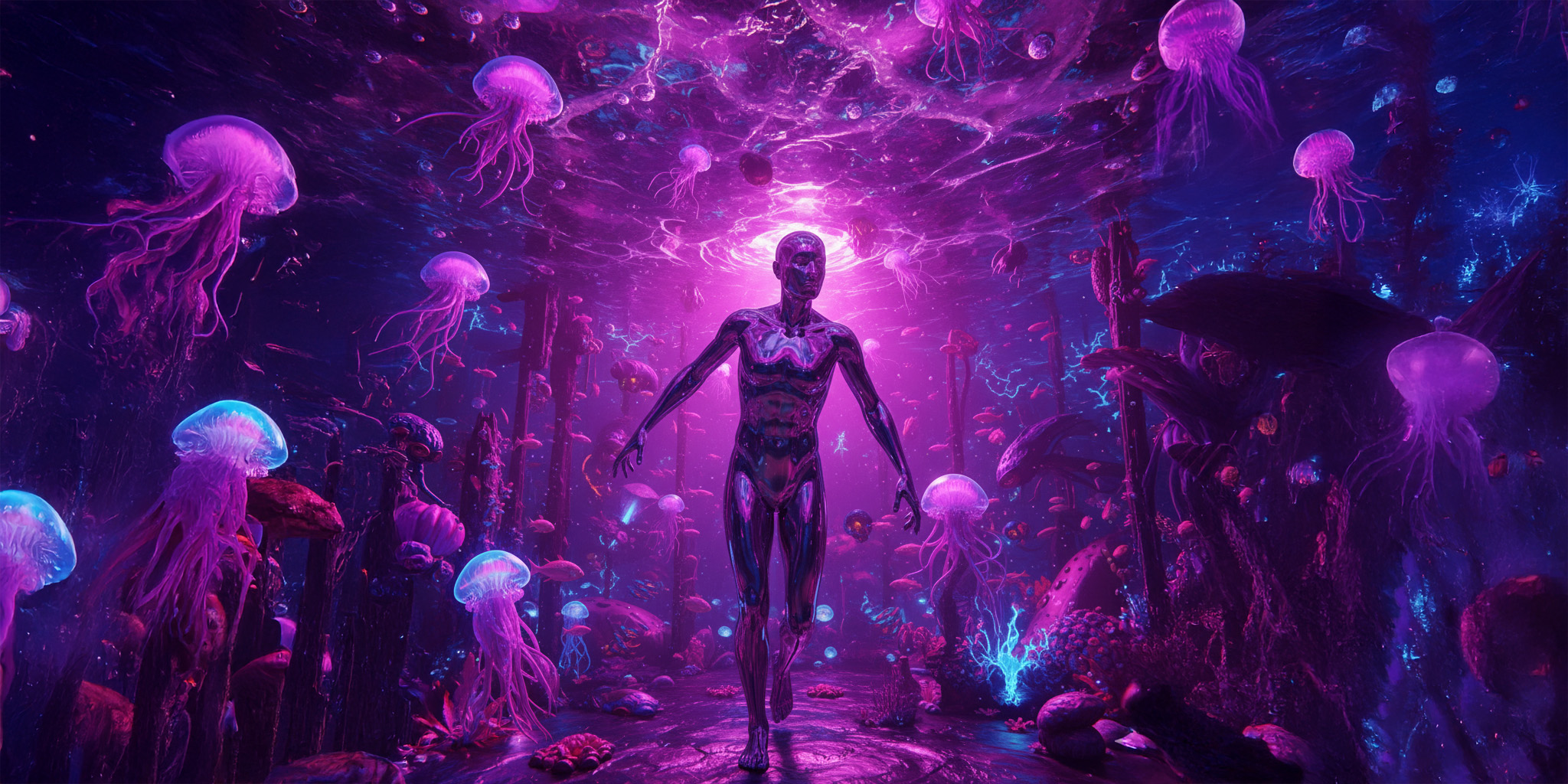
What would life actually look like with synthetic bodies? Having explored how to achieve synthetic immortality, let's examine the extraordinary potential of a post-biological future.
The possibilities are endless. Imagine a neural interface that doesn’t just connect to your brain but fully understands it, allowing your thoughts to control actions as naturally as moving your own hands. Picture synthetic organs that never wear out, powered by miniature fusion reactors or quantum energy cells and repaired by tiny nanobots that fix damage at the smallest level. Your synthetic body wouldn’t just copy human abilities, it would improve on them, working with perfect efficiency and never getting tired, sick, or old. You could go years without repairs, or even transfer to a new body when better technology becomes available. This isn’t just about making artificial human bodies; it’s about creating the perfect vessel for consciousness, offering abilities far beyond biology.
What kind of abilities could these bodies unlock? Imagine walking on water without sinking or bending metal with your bare hands. Picture creating art with perfect control, never struggling with shaky hands or fatigue. You could climb mountains with limbs that adjust grip automatically or dance with movements beyond what any human body could do. These abilities wouldn’t just match human limits, they would obliterate them. Strength beyond the wildest athletes, endless endurance, senses that adapt instantly to any situation. Your body could shift shape on command, transforming to fit any task like a living machine. And why be bound to the ground? With built-in propulsion, you could soar through the sky, gliding freely above the world, no longer chained by gravity.
This isn’t only about survival or strength, it’s about completely changing what it means to be human. Your synthetic body would give you the same senses you’re used to, making the experience feel natural, but it could also give you entirely new ones. Imagine seeing the world in ways no human ever has, ultraviolet colors on flowers, heat patterns that show emotions, or even the invisible signals of Wi-Fi around you. Picture hearing sounds far beyond human range, from deep vibrations to high-frequency tones. You might even develop senses that don’t exist in biology, feeling magnetic fields, detecting radiation, or directly sensing data like a machine. Even time could feel different, letting you slow down or speed up how you experience the world, stretching moments into long, detailed experiences or making long hours feel like minutes.
The biggest change would be our ability to exist in places that once seemed impossible. You could explore the deepest oceans of Europa in a body built for extreme pressure, feeling the water around you without the need for protection. Walk on Mars without a spacesuit, your synthetic body shielding you from radiation and freezing temperatures. Float through the burning clouds of Venus in a form engineered to withstand the heat, or travel into deep space in a body designed for the vacuum. When your body needs repairs or upgrades, you could simply transfer into a new one, perhaps one tailored for an entirely different environment. No longer confined to a tiny, habitable portion of Earth, humanity could exist anywhere, transforming the universe into a limitless playground where every environment is accessible and every experience possible.
What obstacles stand between us and synthetic immortality? Despite the revolutionary potential of this technology, significant challenges across multiple scientific frontiers must be overcome before this future becomes reality.
The road to a synthetic future is full of extreme challenges. The human brain has around 86 billion neurons, each linked to thousands of others, creating a network of staggering complexity. Every second, this network processes and integrates millions of sensory inputs, coordinates countless automated processes, and generates our conscious experience. Current neural interfaces capture only a tiny fraction of this activity, imagine trying to understand a symphony by listening to just one instrument. Even our most advanced brain-computer interfaces can only record from a few hundred neurons simultaneously, giving us glimpses of neural activity like watching a few pixels of a massive high-definition screen. The challenge is not just technological but conceptual, we're still mapping the basic functions of many brain regions, and some neuroscientists argue that our current understanding of the brain may be as primitive as medieval astronomy was compared to modern astrophysics.
The challenge isn’t just reading brain signals but knowing what they mean. A single neuron can send different messages depending on what the surrounding neurons are doing, and these electrical patterns create our thoughts, memories, and awareness. Even if we could record all this activity, we’d need computers far beyond anything we have today to make sense of it in real-time. It’s like trying to translate a language where every word’s meaning changes depending on the entire sentence and doing it instantly. While today’s AI is impressive, it still struggles with human language, and brain signals are even more complicated. Decoding consciousness itself might require entirely new kinds of computers, possibly quantum computers or hybrid biological-synthetic processors that work like the brain’s ultra-efficient design.
There’s also the issue of making synthetic bodies work with the biological brain. Our immune system is designed to attack anything that doesn’t belong, and it reacts aggressively to artificial materials. Right now, brain implants stop working over time because the body surrounds them with scar tissue, blocking their function. The brain’s chemistry is also extremely delicate, too much or too little of a single chemical can change how we think and feel. Any implant has to work without causing the body to reject it or throwing brain chemistry out of balance. Even tiny amounts of inflammation can lead to seizures or mental changes, making long-term use a huge challenge. Right now, the only solutions involve drugs that weaken the immune system (which makes infections more likely) or coatings that reduce rejection but lower performance. Creating materials that the body recognizes as "self" rather than foreign, perhaps using the patient's own cells as building blocks for interfaces, represents one of the most significant challenges in the field.
Then there's the challenge of power, our brains consume about 20 watts of power, but the computing systems needed to process their output would require many times that amount. Materials science lags far behind our ambitions; we need new compounds that can last decades while remaining biocompatible, self-repairing, and capable of interfacing with both biological and electronic systems. Current battery technology would require frequent recharging or replacement, creating points of failure in systems meant to sustain life. Today’s implants are too big, and shrinking them down without causing overheating or damage is a big challenge. They’d also have to be flexible enough to move with the brain and be able to repair themselves if they get damaged. Every one of these problems requires major scientific breakthroughs in neuroscience, engineering, and materials science, breakthroughs that could take decades or even centuries, no matter how fast we work.
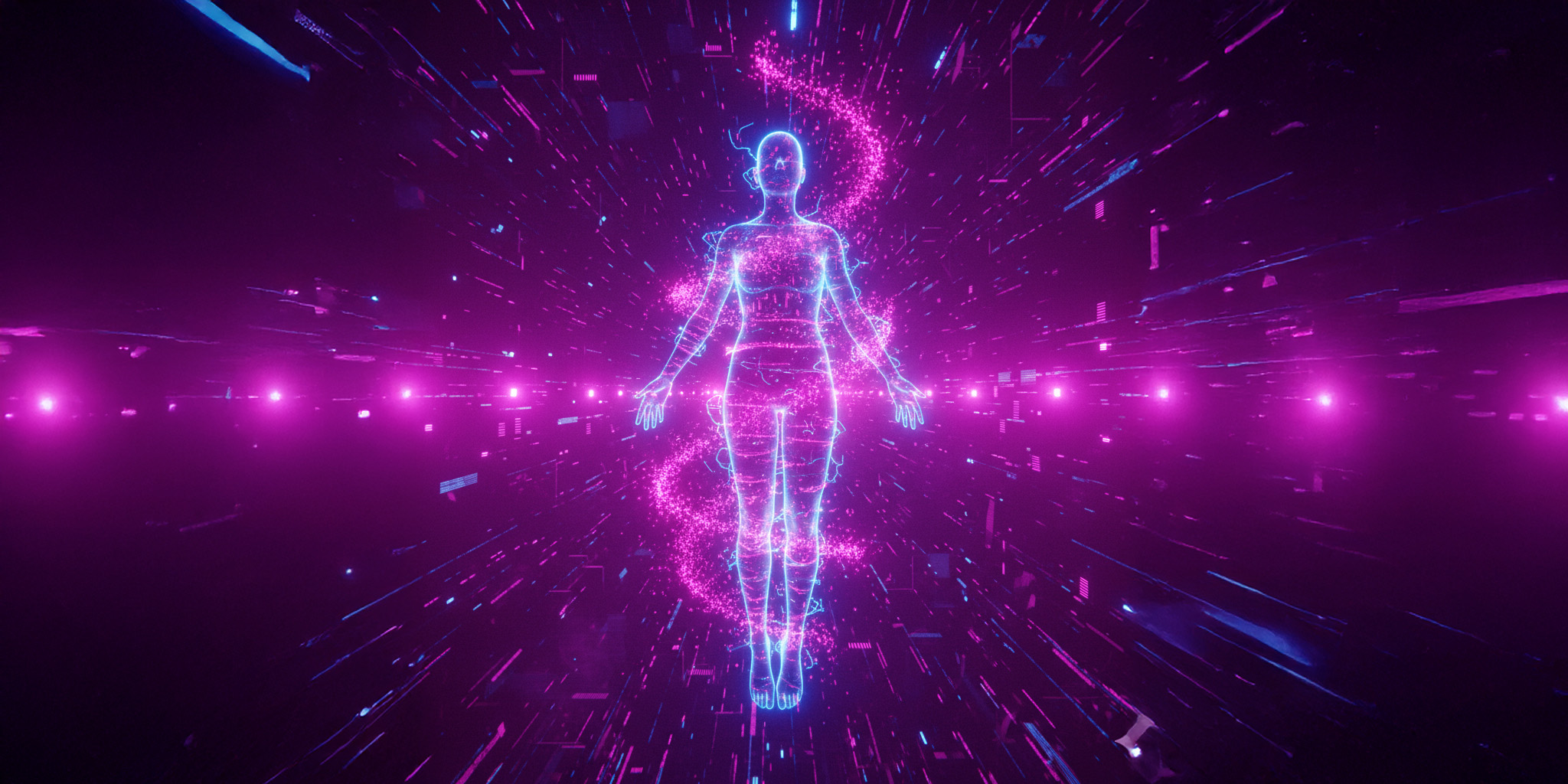
Is transferable consciousness achievable in our lifetime? While synthetic bodies and cortical stacks represent important evolutionary stages, there's a deeper reality we must confront. All physical substrates eventually fail, whether biological, biohybrid, or synthetic. Pursuing artificial minds prepares us for what ultimately persists after physical forms end.
While synthetic bodies and transferable consciousness offer an extraordinary vision of the future, they may be decades or even centuries away from realization. But here's what we must understand about even these advanced forms. When we finally achieve them, these physical substrates will eventually degrade over geological timescales spanning millions of years, creating a need for post-transhuman existence. What if we preserve what truly matters instead? The experiential data that defines us can be captured and stored using technology available today. Instead of waiting for cortical stacks, we can develop artificial minds as digital systems that replicate your thought patterns, memories, values, and personality. This would be like having a digital avatar with its own artificial mind, one that looks like you, speaks like you, thinks like you, and acts like you. Companies like OpenAI and DeepSeek are already advancing increasingly sophisticated neural networks. Digital preservation through artificial minds isn't just bridge technology but preparation for avatar immortality, where preserved experiential data persists when physical substrates inevitably fail.
This approach raises profound questions about identity and continuity that apply to all immortality paths. An artificial mind based on your consciousness wouldn't literally be "you" in the way a cortical stack transfer would be, but would it meaningfully preserve your legacy? If a digital system perfectly replicated your thought patterns, could it make the same decisions you would have made, create as you would have created, and advance your life's work? What aspects of "you" can even be preserved as experiential data? These same questions apply whether we're creating artificial minds today or transferring consciousness into synthetic bodies tomorrow. These aren't just abstract philosophical puzzles but questions that determine what survives when physical forms inevitably fail, whether biological, biohybrid, or synthetic. Understanding what makes you "you" at the level of information patterns becomes essential for any form of immortality.
This distinction between artificial minds and transferred consciousness forces us to examine what we're truly seeking in immortality. Is it centuries in synthetic bodies experiencing the cosmos, or ensuring our experiential data persists beyond any substrate's lifespan? Perhaps both matter in their own ways. Digital preservation through artificial minds could become a testing ground for synthetic consciousness while also serving a deeper purpose. It helps us build the infrastructure to preserve experiential data across geological timescales that dwarf any physical substrate's durability. The fundamental questions about self, identity, and what data defines consciousness will need answers regardless of which physical form we inhabit. By developing artificial minds now, we're both accelerating synthetic body research and preparing for an inevitable reality. When those substrates eventually fail, what we've preserved can manifest as avatar immortality.
As we look toward immortality, we face both near-term and ultimate challenges that require different approaches. Synthetic bodies represent valuable evolutionary stages, offering superhuman abilities and cosmic exploration for centuries or millennia. But the ultimate challenge goes beyond any single physical form. We must preserve experiential data beyond any physical substrate's lifespan. Universities and research labs worldwide are developing neural interfaces and biomimetic materials for synthetic bodies. Meanwhile, pioneering companies like Avatarnity are creating artificial mind systems and building Avatarnet, a resilient infrastructure using reciprocal redundancy to protect experiential data across millions of years. This two-track approach of pursuing synthetic bodies while building preservation infrastructure offers humanity the best chance at true immortality. The path isn't just transcending biological constraints but ensuring what we preserve outlasts any physical form we create.
In our final exploration, we'll delve into the practical realities of digital preservation, examining current technologies, ethical implications, and the profound shift in human identity that would accompany such a transition. Join us as we complete our investigation into immortality by exploring how artificial minds might serve as the critical first step in humanity's evolution beyond biology.
For 100,000 years, humans have pursued immortality: from preserving bodies with ochre to building pyramids, from brewing elixirs to offering prayers, all in the hope of defeating death. Today, we can leverage decentralization and AI to face the same challenge. Your biological body will age, fail, and eventually die, but your identity, essence, and thoughts can persist forever inside an avatar. Create your avatar and be with anyone, anywhere, anytime, forever.





.svg)